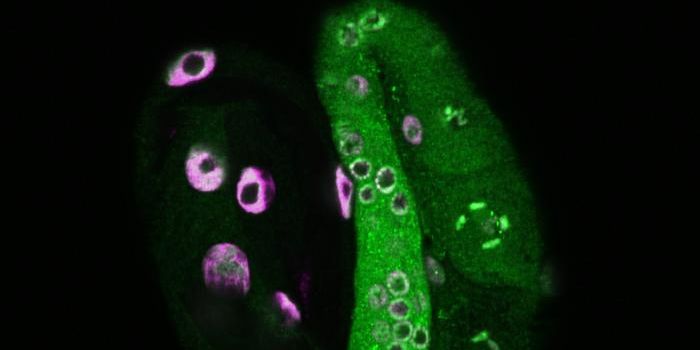
Infections with Epstein–Barr virus (EBV) are very common; the virus is estimated to have infected at least 90% of all adults worldwide. It can easily be transmitted through the saliva of an infected person. It’s thought that most people don’t have any symptoms when they are infected, but some individuals experience an illness caused mononucleosis at the time of infection, which can cause fever and sore throat. Past EBV infections have been associated with a wide array of chronic diseases, including lupus, heart disease, multiple sclerosis and some types of cancer.
Now, scientists have identified variants in 22 genes that are linked to the risk of developing a range of chronic illnesses following an EBV infection. The findings, which relied on medical and genetic data from about 750,000 people in the US and UK, have been reported in Nature.
Many of the variants that were found in this study arise in immune system genes, and may affective body’s ability to control EBV infections. Certain variations in the sequence of these genes were found to increase a carrier’s risk of having higher EBV virus levels in their blood, which has been associated with an increased likelihood of developing a chronic disease.
These findings may help scientists develop better strategies for identifying people who are at risk of developing chronic illnesses after an EBV infection, and ways to prevent that from happening.
“This research adds a missing piece to the puzzle of chronic disease. We show that genetic variation influences how well EBV is controlled, and that poorer viral control is associated with several long-term illnesses,” said co-corresponding study author Dr. Ryan Dhindsa, assistant professor, pathology & immunology at Baylor College of Medicine, among other appointments. “These findings suggest that health outcomes reflect a complex interaction between our genes, lifestyle, and viral history. While further work is needed to determine which of these links are causal, the results point to new ways to identify risk and guide future efforts to prevent and treat chronic disease.”
“Identifying the roles of these 22 genes that are a significant factor in EBV control offers a profound leap forward. We found that people with higher EBV levels are about 50% more likely to have rheumatoid arthritis and nearly twice as likely to have COPD compared to those with lower levels,” noted Slavé Petrovski, the VP of the Centre for Genomics Research at AstraZeneca. “Insight into the genetic drivers behind this not only helps us understand who is at greater risk of longer-term disease burden but also informs the next wave of research into therapeutic and potentially early intervention strategies.”
Experienced research scientist and technical expert with authorships on over 30 peer-reviewed publications, traveler to over 70 countries, published photographer and internationally-exhibited painter, volunteer trained in disaster-response, CPR and DV counseling.