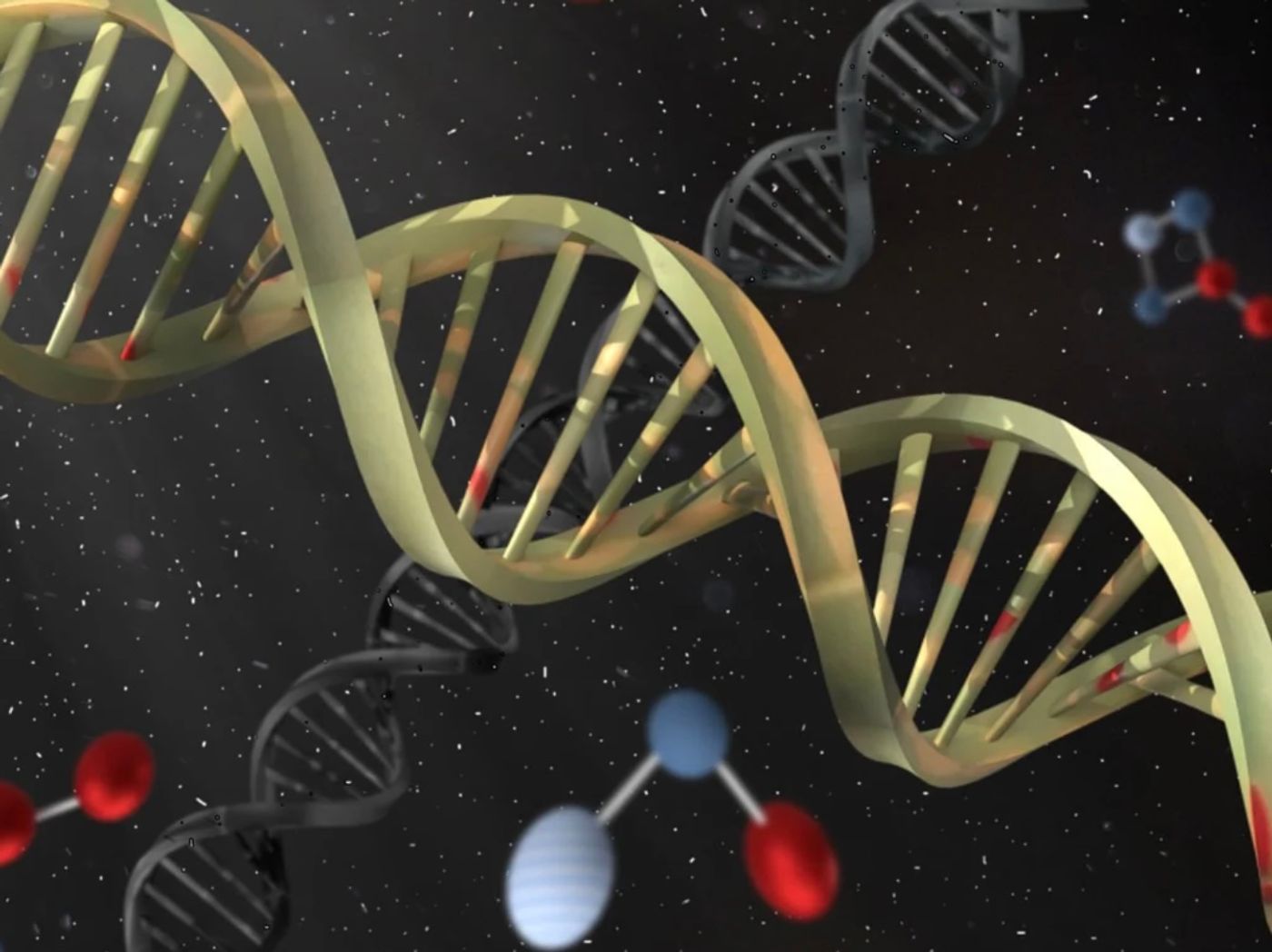
When a gene is active, there is cellular machinery that transcribes the sequence of that gene from DNA into messenger RNA. This is a fundamental cellular process that is essential to the proper function of organisms. Now scientists are revealing new details about gene transcription. Reporting in Nature Chemical Biology, researchers have found a novel trigger for this process. This work centered on a group of molecules called alarmones that can often be found in many different cell types in a wide range of organisms. The levels of alarmones often increase during times of cellular stress.
RNA molecules are usually capped with a chemical modification that can lend stability to the molecules and prevent their premature degradation. But there are also other, alternative caps that cells can put on RNA molecules. Scientists are still learning about these more unusual caps. The caps on alarmones, for example, are made up of dinucleoside polyphosphate molecules, and they can shield RNA when the cell is stressed or threatened.
This work, which used advanced techniques like cryo-electron microscopy, has indicated that RNA molecules with alarmone caps can be produced right where the cell starts to transcribe a gene. In bacterial cells, the enzyme that transcribes DNA into RNA, known as RNA polymerase, can initiate gene transcription with dinucleoside polyphosphates (NpNs) instead of the usual RNA building blocks.
The study also showed that NpNs also have their own binding mechanism; they bind to RNA polymerase’s active site, which is where genetic information is transcribed.
"We're describing something that truly occurs in cells and that we're now able to observe directly at the level of individual molecules. This allows us to answer fundamental questions about cellular processes, such as how cells adapt to stress,” said senior study author Dr. Hana Cahová, head of the Chemical Biology of Nucleic Acids research group at the Institute of Organic Chemistry and Biochemistry of the CAS.
“RNA plays a central role in this, as it carries the cascade of information underlying any cellular response; for example, to threatening conditions caused by nutrient deprivation or temperature shock."
Experienced research scientist and technical expert with authorships on over 30 peer-reviewed publications, traveler to over 70 countries, published photographer and internationally-exhibited painter, volunteer trained in disaster-response, CPR and DV counseling.