
Investigator, Howard Hughes Medical Institute, Professor of Biochemistry, Adjunct Professor of Genome Sciences, Physics, Computer Science, Chemical Engineering, and Bioengineering, University
BIOGRAPHY
AUG 22, 2013 11:00 AM PDT
Design of protein structures, functions and assemblies
Presented at:
Genetics and Genomics Virtual Event Series 2013
Speaker
Abstract
I will describe recent advances in computational protein design which allow the generation of new protein structures and functions. I will describe the use of these methods to design ultra-stable idealized proteins, flu neutralizing proteins, high affinity ligand binding proteins, and self assembling protein nanomaterials. I will discuss possible applications to therapeutics, vaccines and diagnostics. I will also describe the contributions of the general public to these efforts through the distributed computing project Rosetta@home and the online protein folding and design game FoldIt.
You May Also Like
DEC 16, 2025 | 8:00 AM
Currently, the process for microbial identification research in many laboratories involves a combination of culture, PCR, and either send-out or in-house sequencing-based testing – oft...
DEC 17, 2025 | 8:00 AM
Parkinson’s disease (PD) remains one of the most challenging neurodegenerative disorders to diagnose and monitor. Conventional clinical assessments and imaging often miss the early mol...
DEC 18, 2025 | 8:00 AM

Immunotherapy has transformed cancer treatment, but persistent challenges, such as T cell exhaustion, limited persistence, and variability in response, continue to impact therapeutic success...
JAN 14, 2026 | 10:00 AM

Join us for an insightful webinar to discuss a holistic approach to testing for TB in a clinical setting. Tuberculosis remains a global health challenge and accurate, timely diagnosis is cri...
JAN 15, 2026 | 8:00 AM
Personalized medicine promises to significantly improve patient outcomes, but achieving this requires a deep understanding of human health and disease mechanisms at the molecular level. The...
JAN 20, 2026 | 11:00 AM
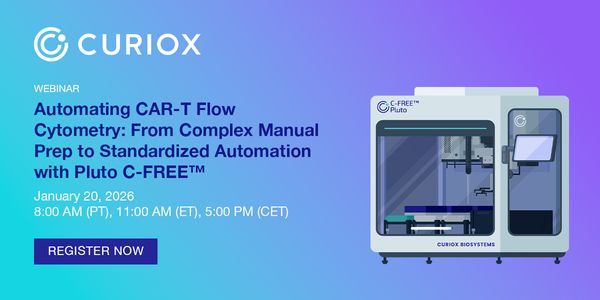
CAR-T translational research demands precise, reproducible, and scalable flow cytometry workflows. Manual centrifugation and antibody preparation steps remain major sources of variability an...
Loading Comments...